

3D virtual model
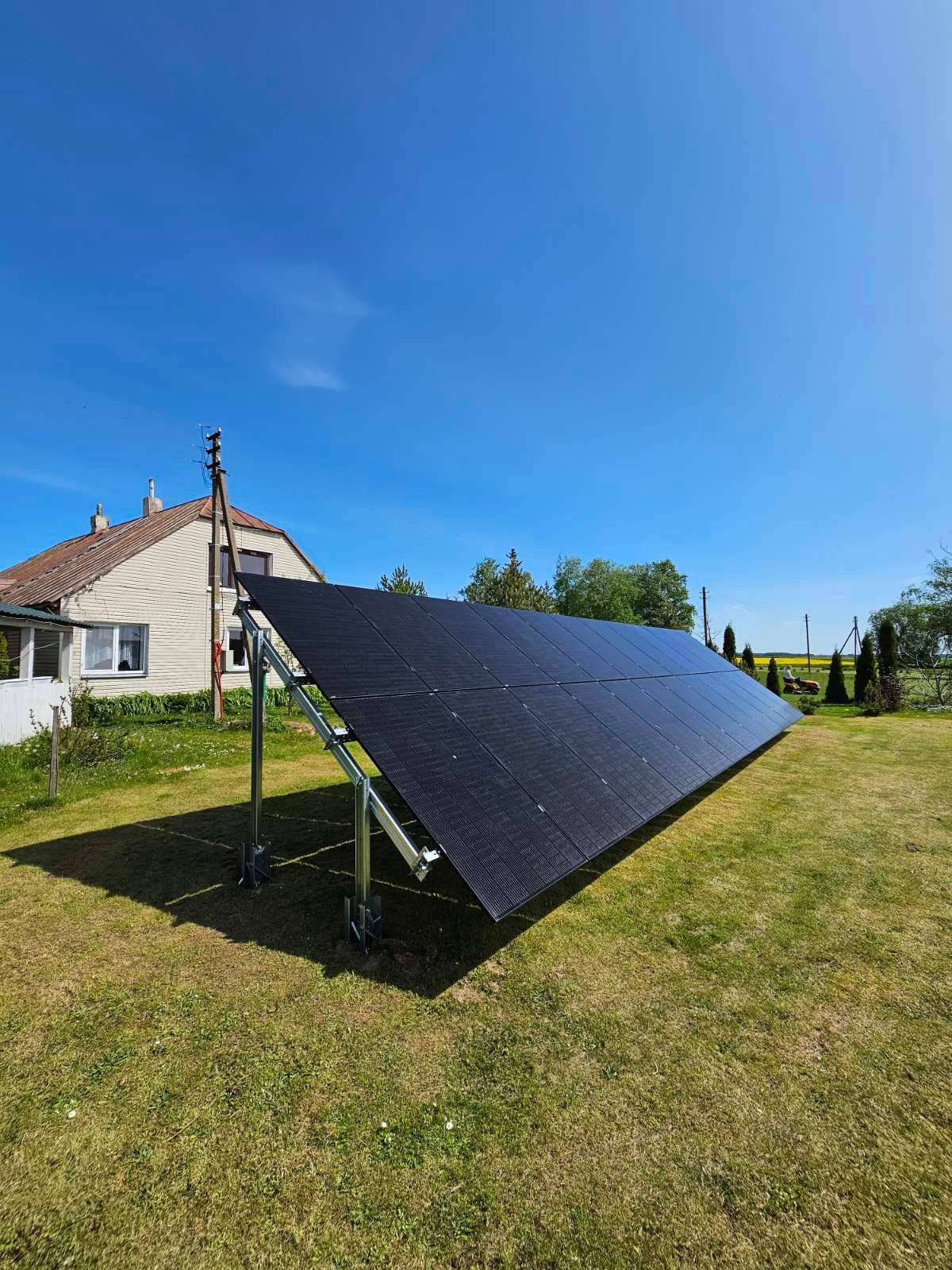
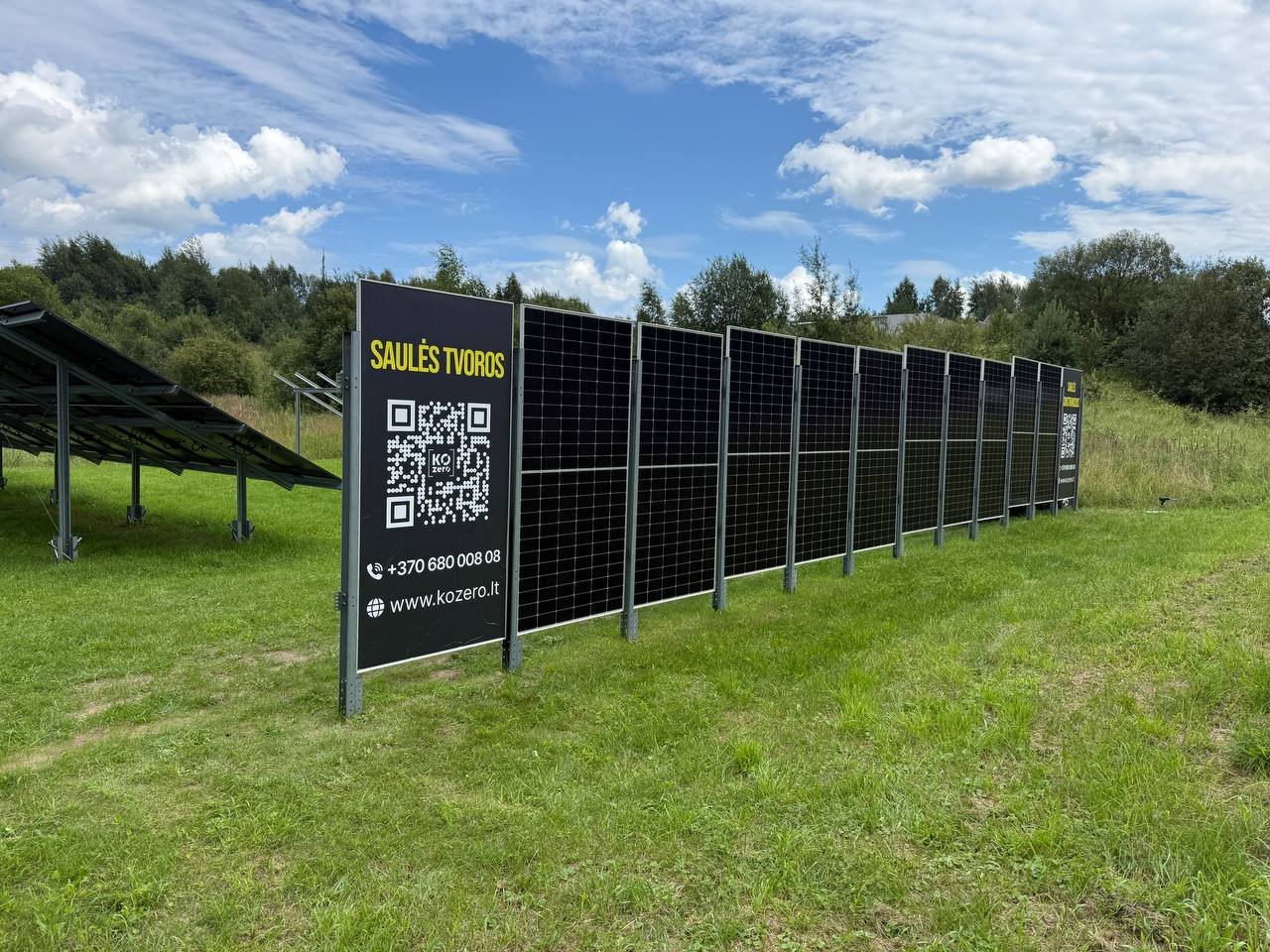
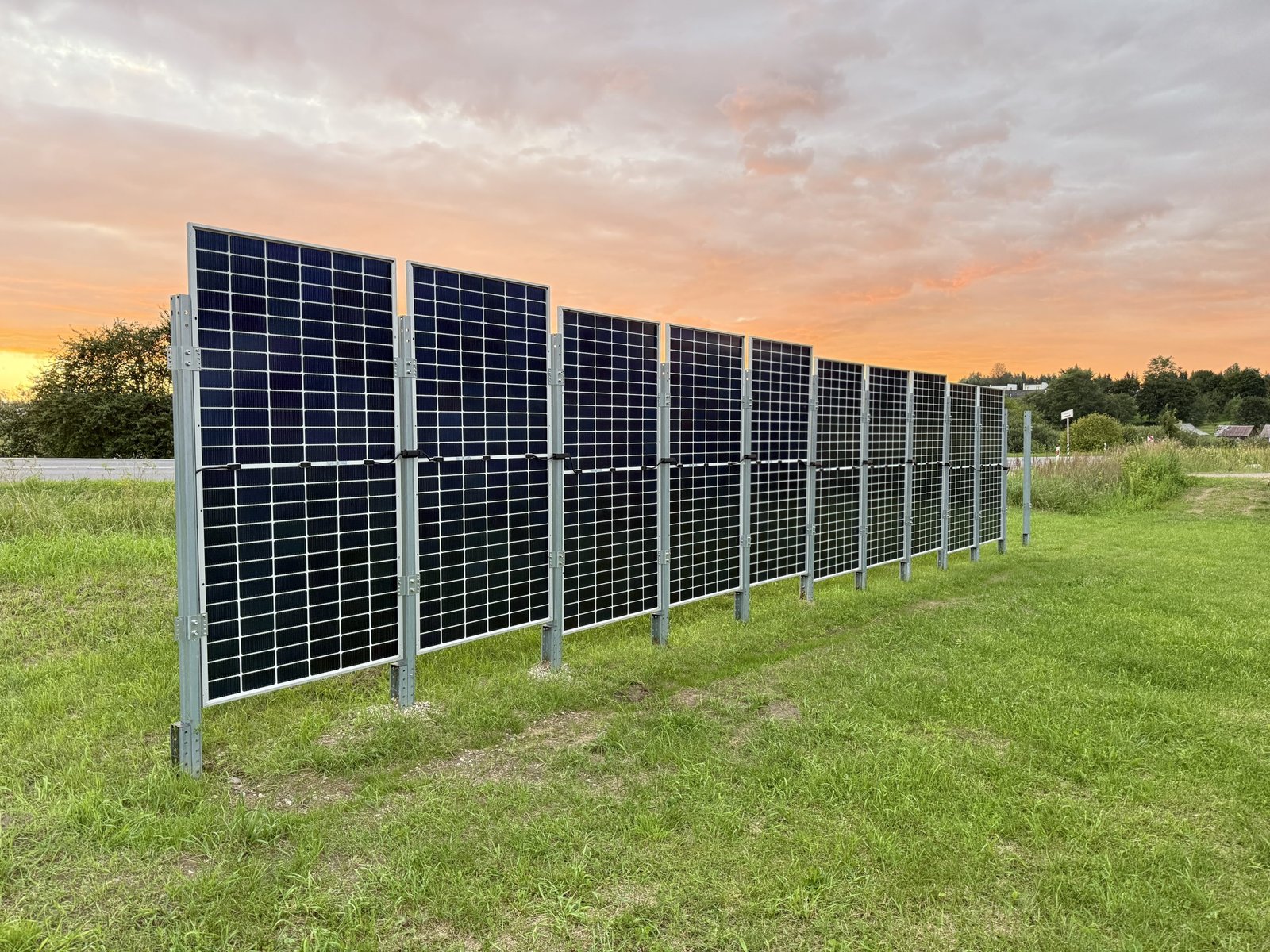
We make classic structures for any number of solar modules ‐ from 4 modules upwards, in steps of 2. Structures are built to the customer's requirements.
The most popular structures are for 12, 18, 20, 22 and 24 modules. We always keep these in stock.
Click the button below and inspect the structure from every side. You can remove any part, zoom in on any joint and study the structure in detail. That makes it easier to decide.
You will also be able to download the assembly drawing.
Click to turn the 3D model around:
36° angle for Lithuania
The structures most commonly installed in Lithuania are made and intended for the Polish (30°) and German (25°) markets.
Lithuania lies further north, so the optimal tilt angle differs from that of our neighbours. The mathematically optimal angle is 36°
We produce a structure with a 36° tilt angle, hence our slogan "Made in Lithuania and designed for Lithuania"


14% stronger construction
Constructions most frequently transported to Lithuania are from Poland. They are made from C-profile, which is commonly used in the construction industry and has been adapted for the production of solar power plant structures.
Our engineers assessed the resistance to bending and twisting of the C-profile and concluded that it is not the most optimal choice for a solar power plant structure.
By using the same amount of material, we have created a more advanced SIGMA profile. It is approximately 14% more resistant to bending loads and even approximately 23% more resistant to twisting loads.
Computer simulations and physical tests were conducted at Kaunas University of Technology (KTU).
By using the same amount of materials, we can offer a stronger construction for the same price.
Quality material
Under EU and Lithuanian construction regulations, the standard material is galvanised metal with a 275 g/m² (19 micron) zinc coating, warranted for up to 25 years. That is already a serious standard. As an example, old (Soviet-era) apartment block window sills have lasted 40 years without rusting.
But we know these structures work in very harsh conditions, so KOZERO® structures are made from metal with a 430 g/m² coating (about 30 microns thick) ‐ roughly 56% thicker than the standard 275 g/m² coating (~19 microns).
We also use ArcelorMittal steel made in Germany with a Magnelis® ZM430 zinc, aluminium and magnesium coating with a nominal weight of 430 g/m². The coating has increased wear resistance and protects the steel effectively even in contact with soil.
So we have not only increased the thickness of the anti-corrosion layer but also raised the level of the coating itself ‐ from a basic zinc coating to the more advanced Magnelis® coating.

Structure material
The structures are made from high-quality low-carbon galvanised structural steel S350GD, conforming to the EN 10346 standard.
Metal thickness and material
- The load-bearing legs and cross beams are made from 2.5 mm S350GD steel ‐ a structural steel with a minimum yield strength of 350 MPa and a tensile strength of about 420 MPa.
- The longitudinal profiles are made from 1.5 mm S350GD steel ‐ a structural steel with a minimum yield strength of 350 MPa and a tensile strength of about 420 MPa.
The metal thicknesses were selected according to the requirements of the construction technical regulation STR 2.05.04:2003 "Actions and loads", taking into account the loads acting on the structures. This regulation defines the actions and loads on load-bearing structures, including snow, wind and other loads.
The calculations and tests were carried out by the team of the Department of Strength of Materials at Kaunas University of Technology, the most experienced in Lithuania.
Details thought through
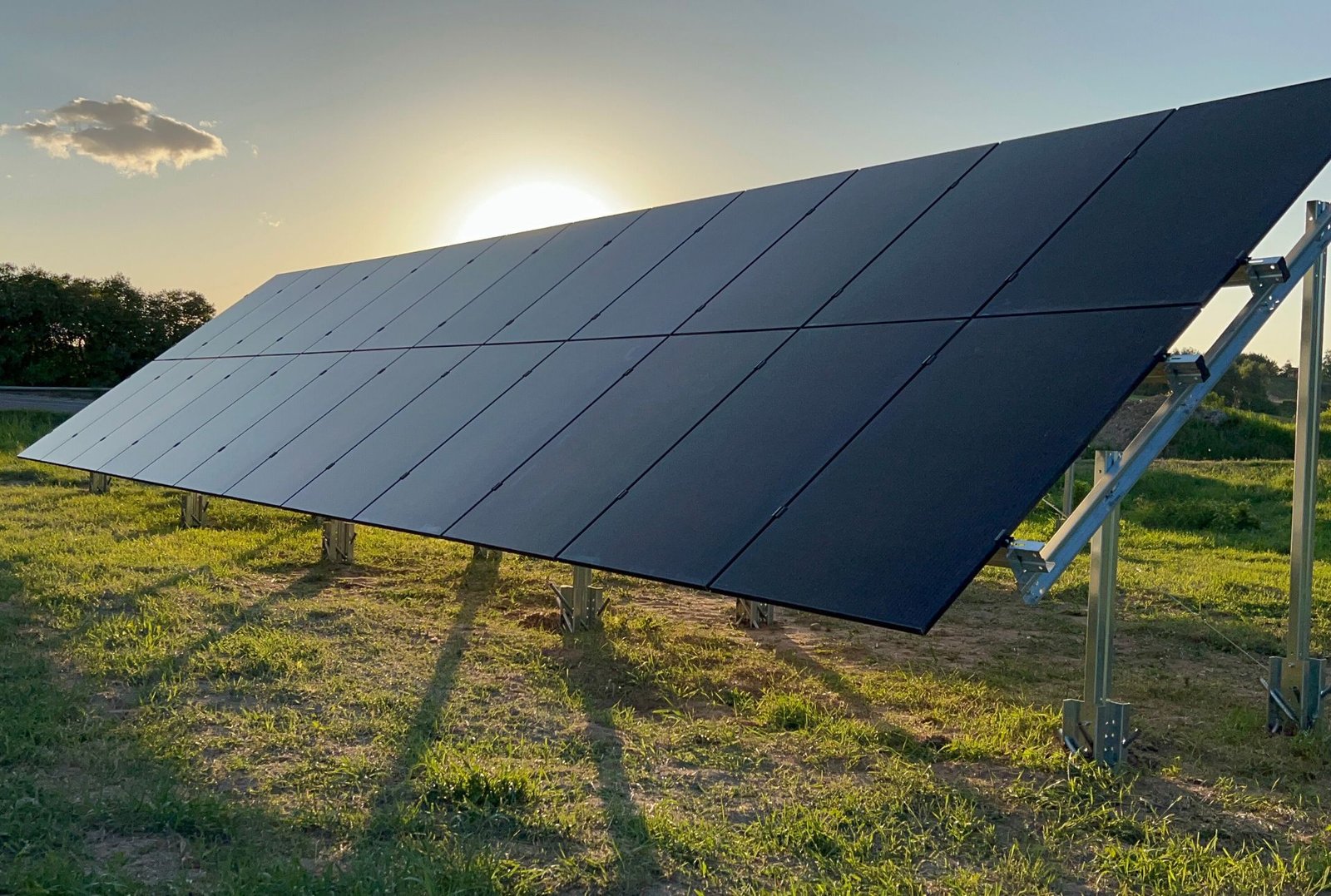
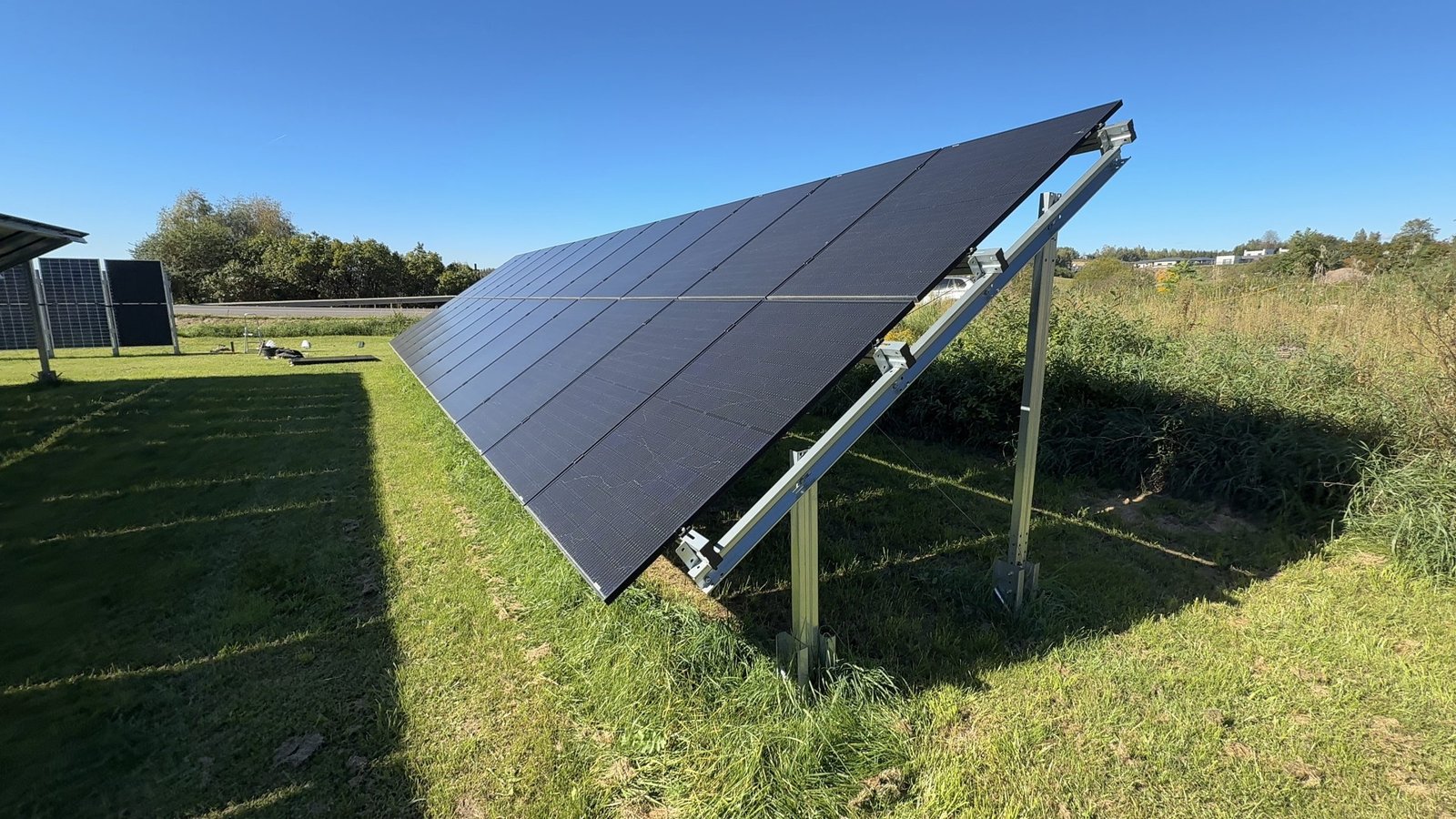
36° angle for Lithuania
An optimal tilt angle calculated for Lithuania's geographic location.
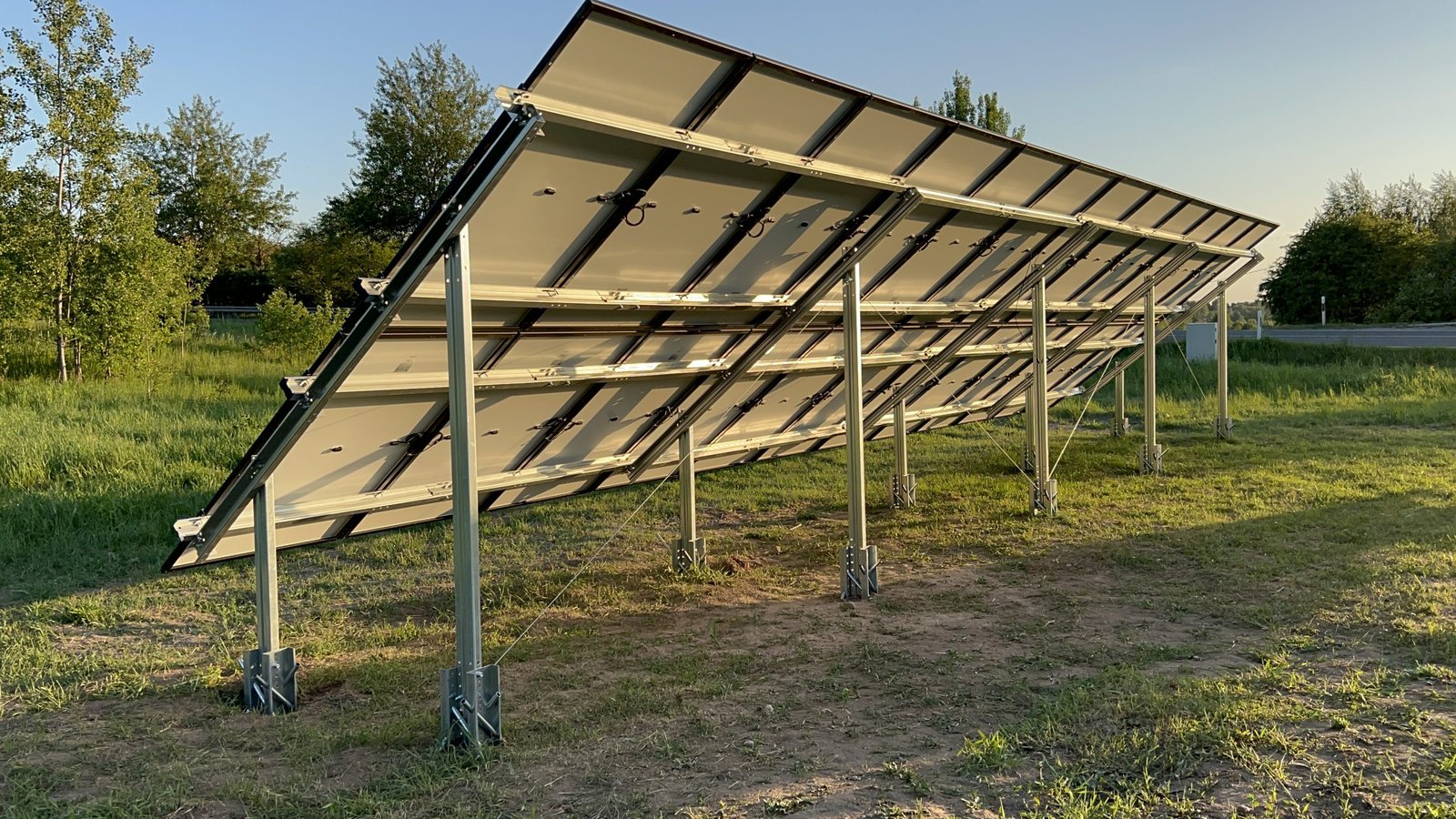
Hammered legs
Installed without concreting and without heavy machinery.
Omega profiles
We produce profiles 1.5 mm, 2 mm and 3 mm thick to the EN 1090 standard.
Photos
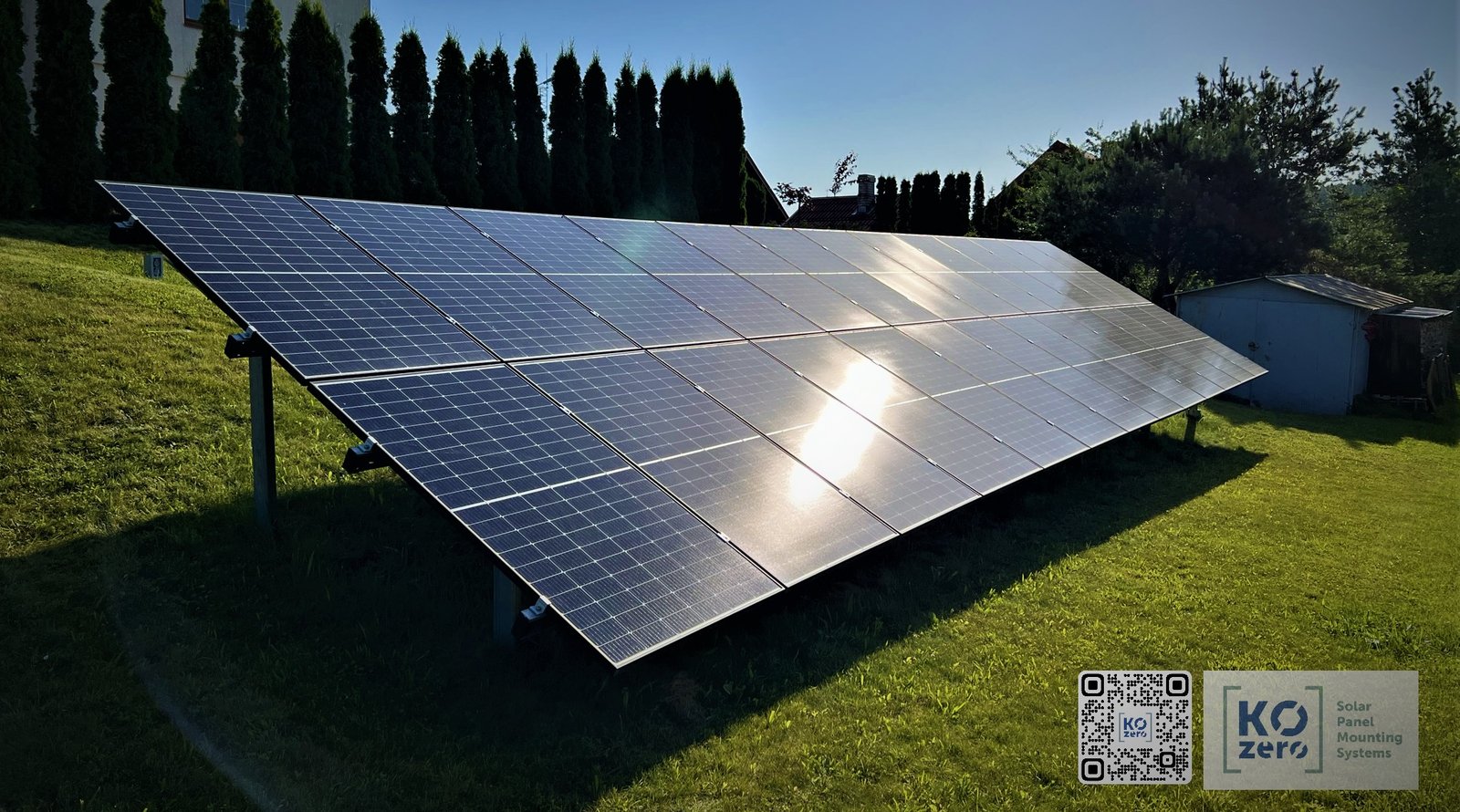
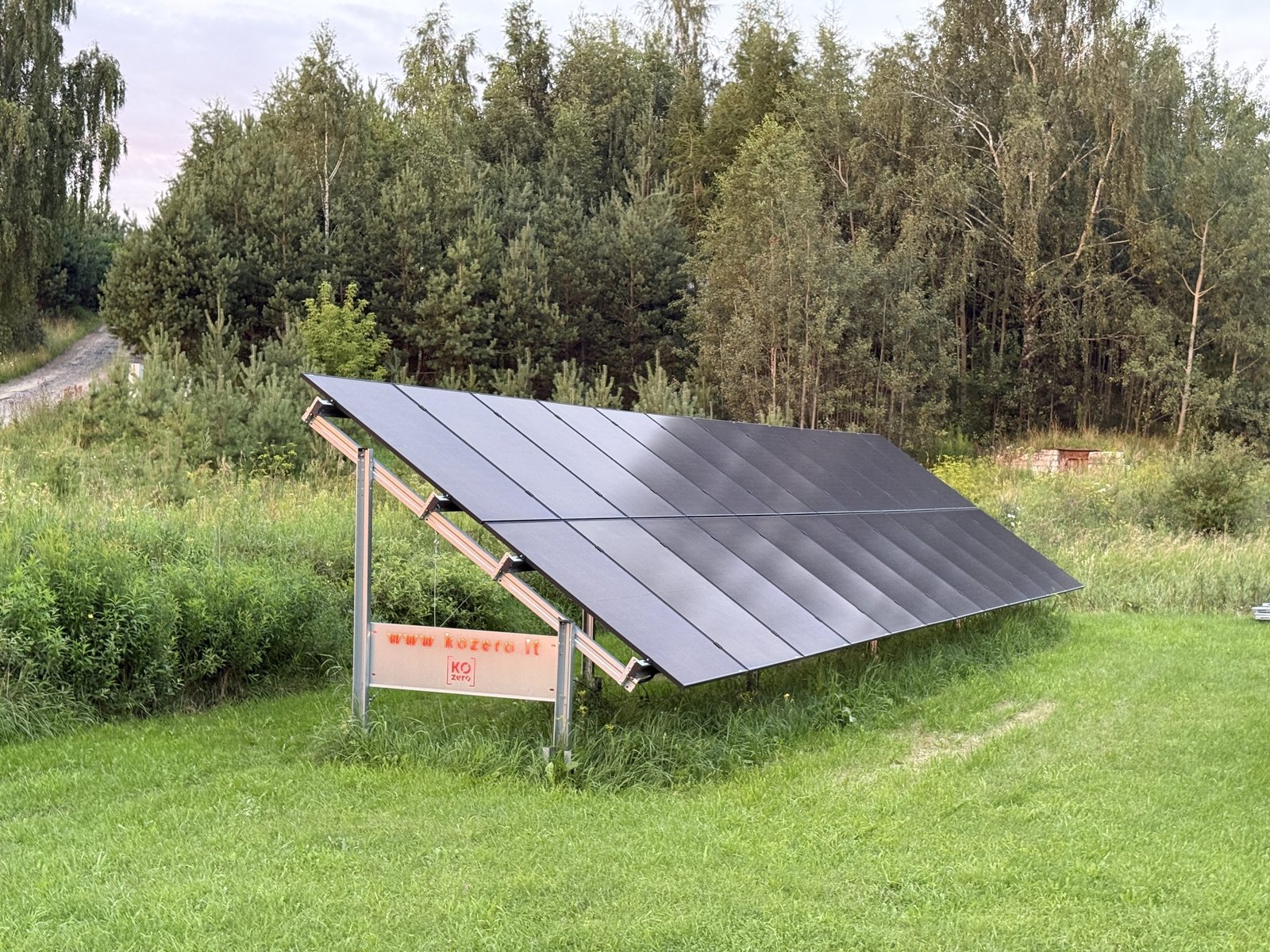
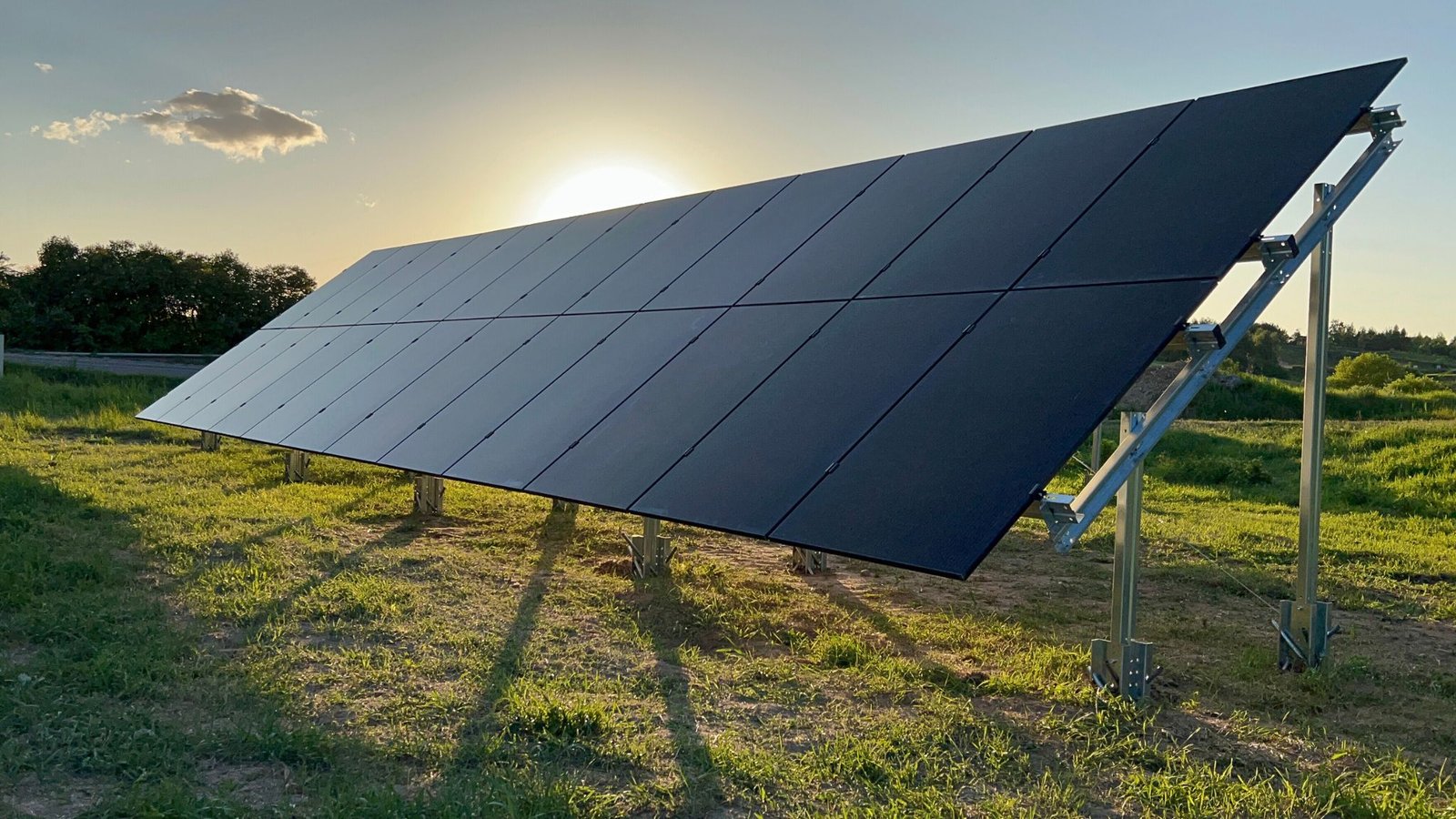
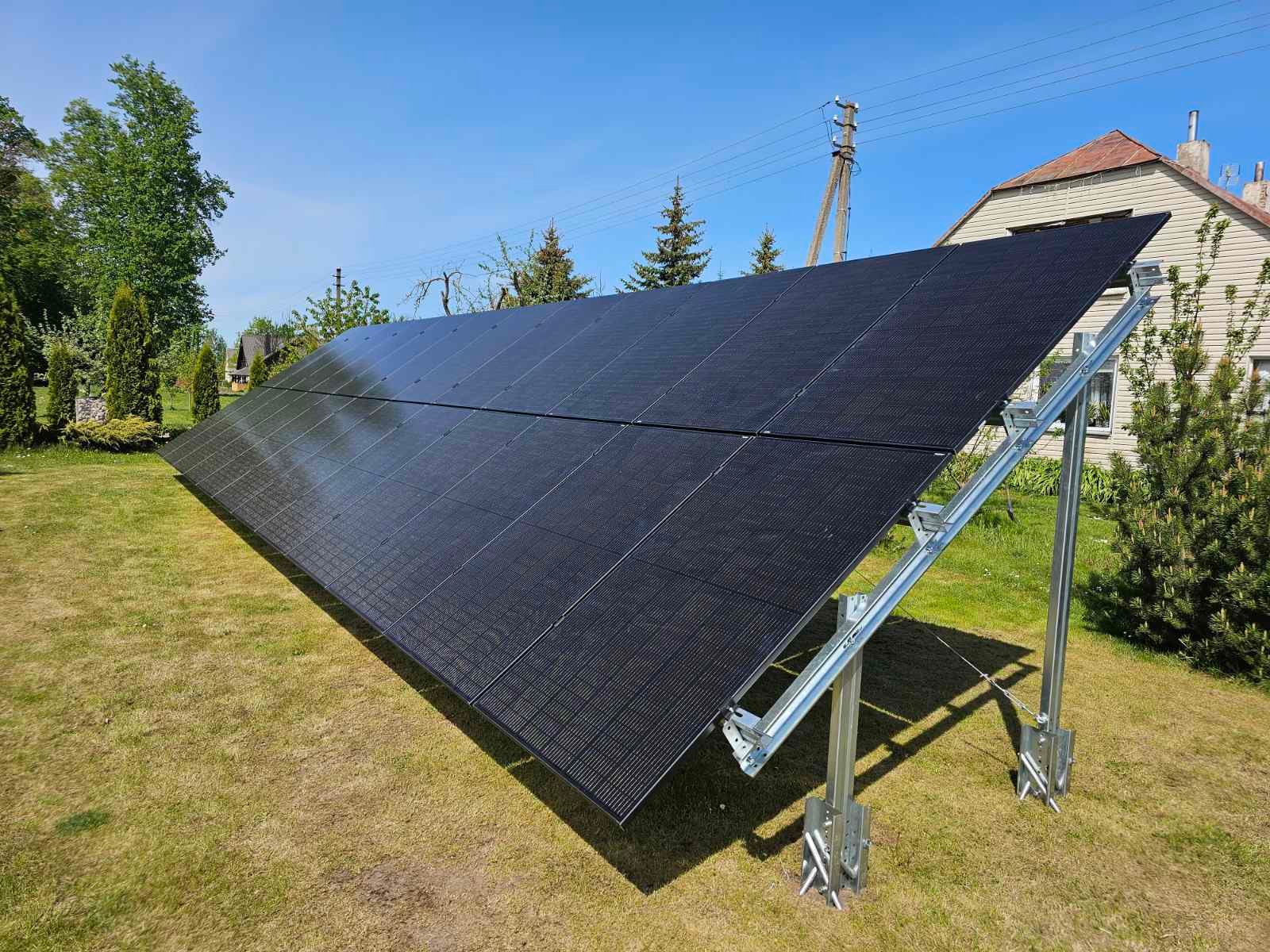
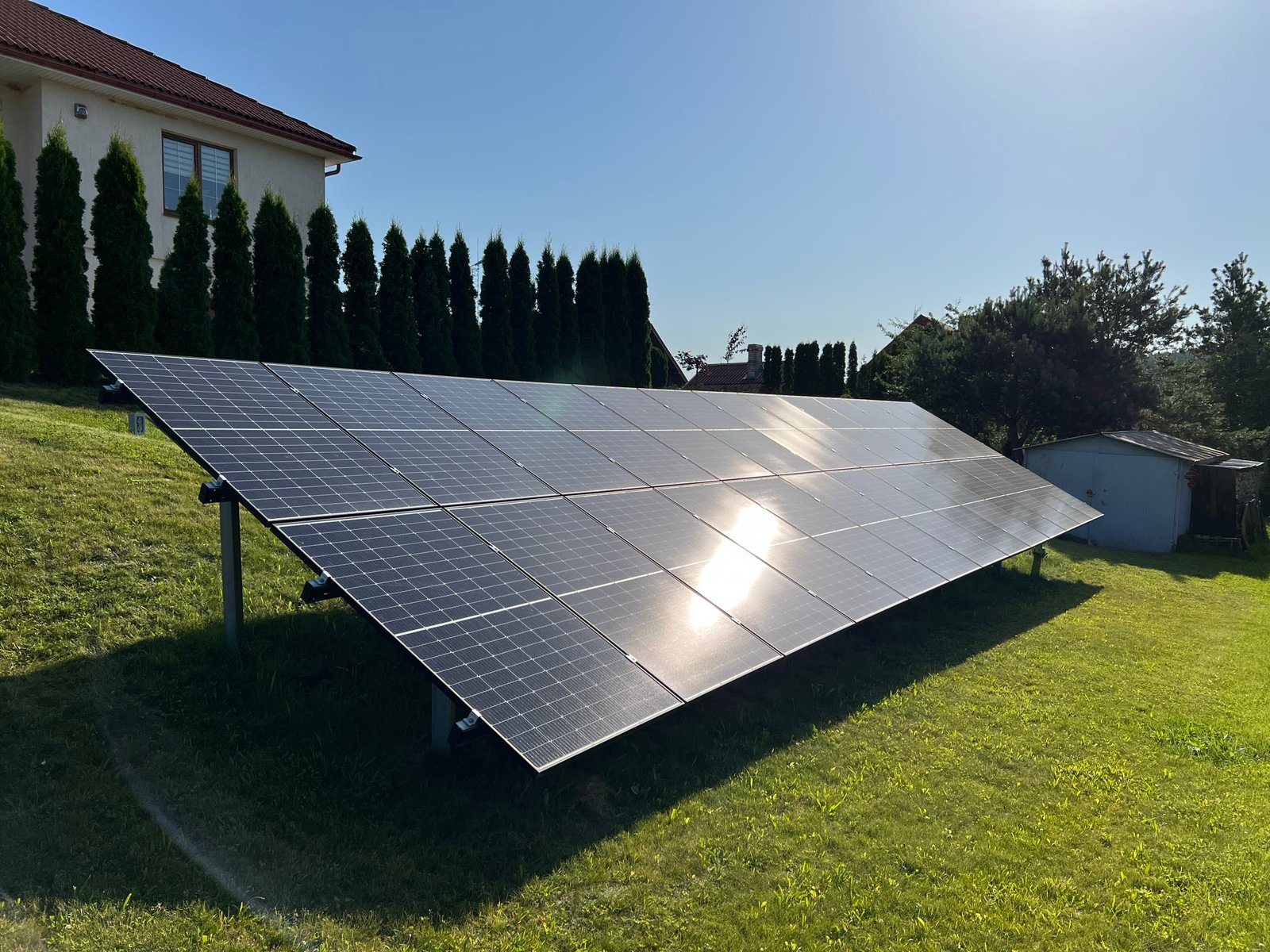
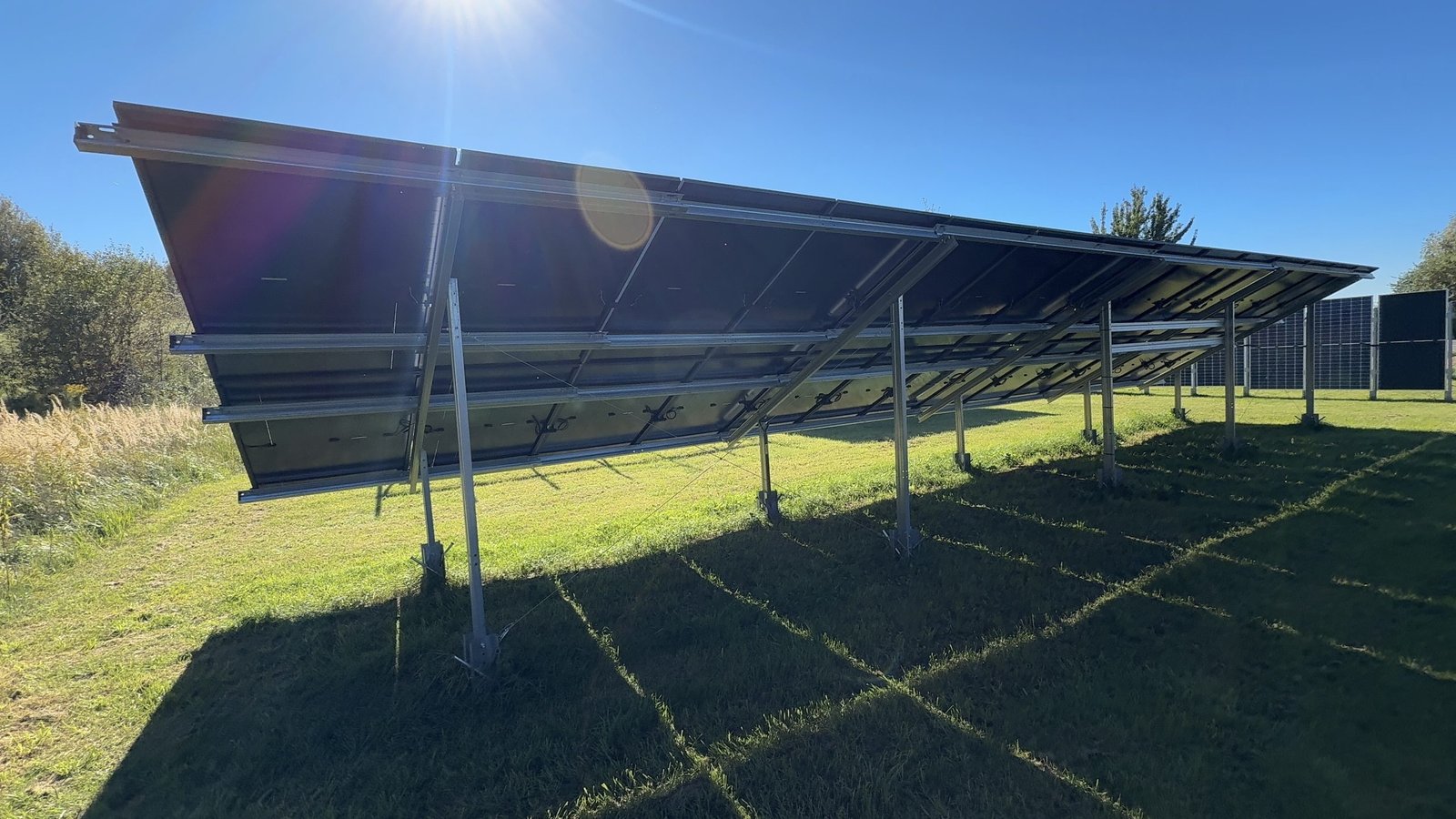
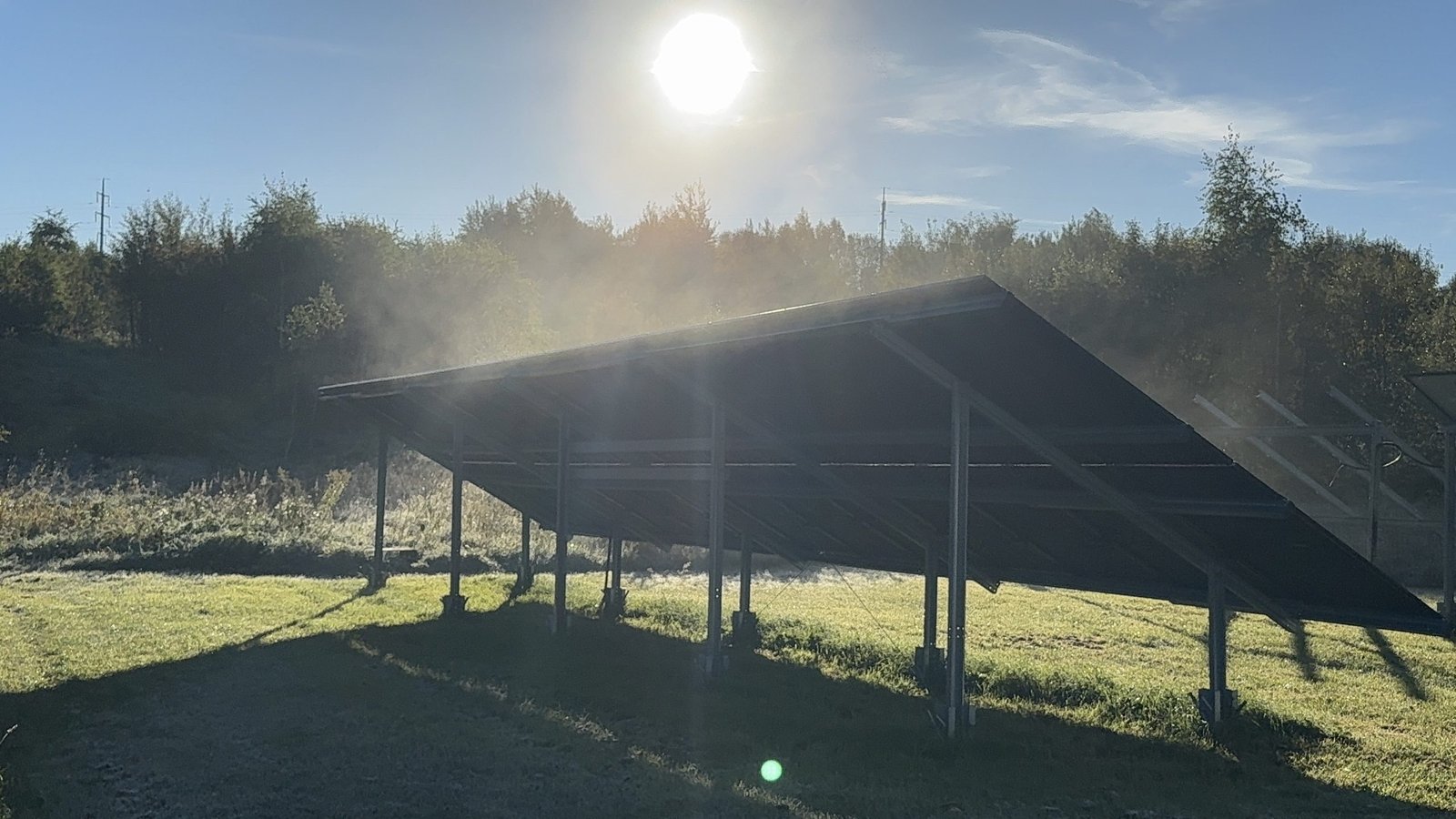
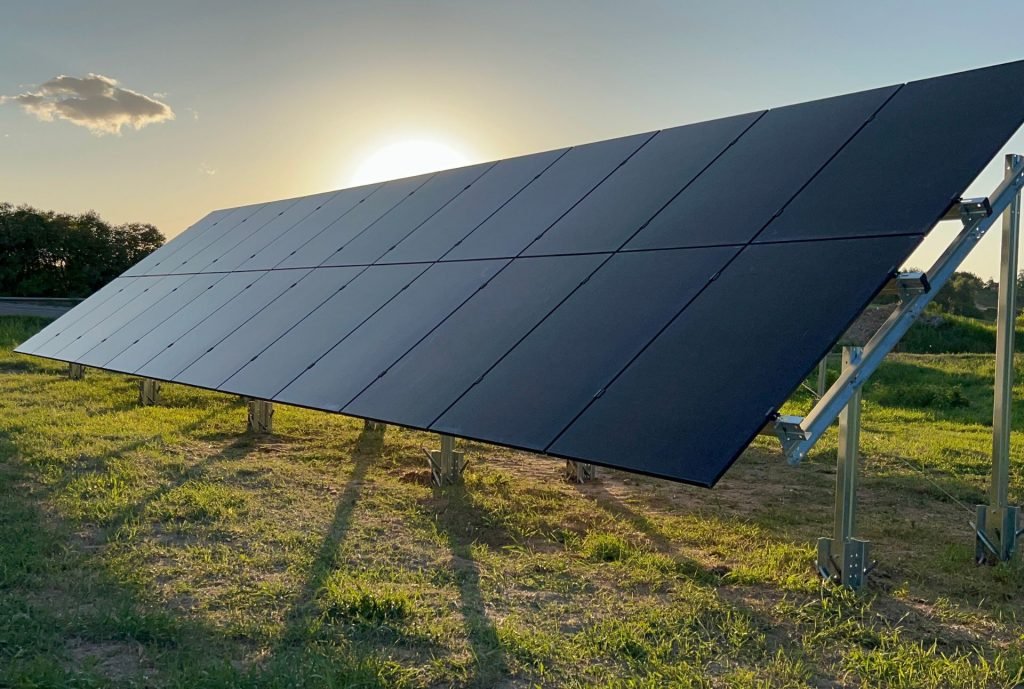
Anti-corrosion coating
Metal with a Magnelis® or zinc anti-corrosion coating.
Drawing, 3D and video
Each set comes with an assembly drawing, a 3D model and a video guide.
CE marking
Every part is marked in production according to the applicable standard.
Video overview
Frequently asked questions about this structure
No. Version A is installed on hammered legs, version B on the 4Root system. Neither requires concreting.
Yes. Every structure comes with an assembly drawing, a 3D model and a video guide on YouTube. Most customers assemble it themselves, without special machinery.
Lithuania lies further north than Poland (30°) or Germany (25°), so the optimal tilt angle differs. Our structures are made with a 36° angle calculated for Lithuania.
Yes. We sell single sets too ‐ to companies and private customers alike. Standard configurations are always in stock.
Request a quote
This site is protected by reCAPTCHA. The Google privacy policy and terms of service.